





In the realm of international relations, the dynamics between nations are shaped by mutual interests, strategic alliances, and shared goals.
A recent analysis by U.S. foreign policy expert, Diplomat Luzindana Adam Buyinza highlights the steadfast relationship between the United States and Uganda, particularly under the leadership of President Yoweri Museveni. According to Buyinza, the notion that the Trump administration would aid the Ugandan opposition in their quest to unseat Museveni is fundamentally misguided.
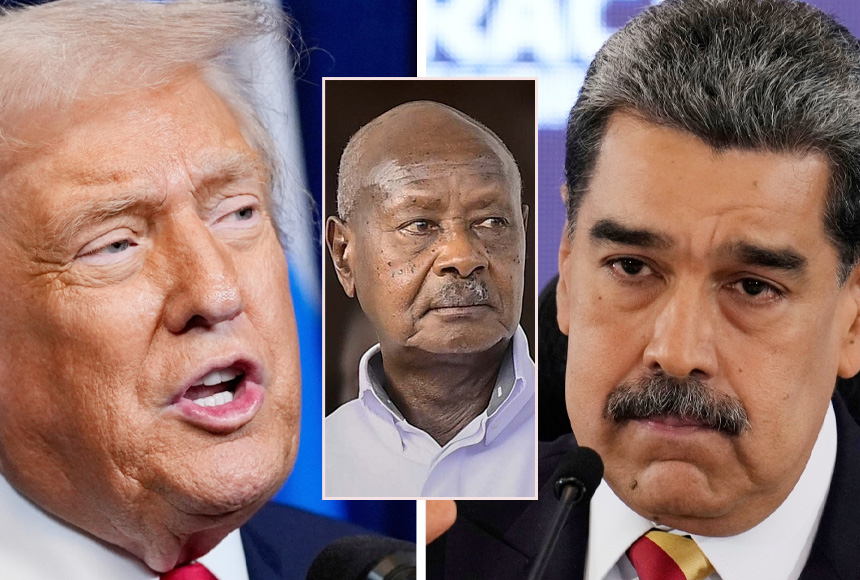
The excitement among Ugandan youth regarding potential U.S. intervention stems from the recent U.S. actions in Venezuela,where the Trump administration took decisive measures against President Nicolás Maduro, captured him and now in USA detention facilities. However, Buyinza luzindana argues that such expectations are not grounded in the realities of U.S. foreign policy, which has historically favored stability and continuity over upheaval. Museveni’s governance has not only aligned with U.S. interests but has also fostered a cooperative relationship that the Trump administration values. Before his election, Museveni expressed admiration for Trump’s leadership style, indicating a mutual respect that has only solidified over time.
The opposition groups in Uganda have over the last year failed to establish a formidable relationship with the Trump administration as well as the US Intelligence apparatus. The Uganda’s opposition had good working relationship with the Joe Biden administration.
More Read
Understanding the foundation of U.S. foreign policy is critical to grasping why Museveni remains an ally rather than a target of USA. Buyinza outlines three fundamental goals of U.S. foreign policy: national security, promoting democracy, and ensuring economic prosperity. Museveni has consistently upheld these principles by collaborating with the U.S. to combat terrorism and enhance regional stability. His government’s efforts in Somalia, where Ugandan troops play a pivotal role in the African Union Mission in Somalia (AMISOM), directly contribute to U.S. counterterrorism objectives and demonstrate Uganda’s commitment to global security.
The U.S. foreign policy also emphasizes the importance of maintaining access to natural resources, a goal that Uganda has facilitated rather than obstructed. Under Museveni’s leadership, Uganda has not only become a significant partner in regional security but has also supported U.S. economic interests through trade and investment. Buyinza emphasizes that Museveni’s administration has never posed a threat to U.S. foreign policy objectives, instead choosing to focus on national development and fostering a stable environment conducive to international partnerships.
Moreover, the U.S. foreign policy framework prioritizes promoting democratic values and human rights. While the U.S. has raised concerns about human rights practices in Uganda, it is essential to recognize that Museveni’s government has made strides in economic growth and stability, aligning with broader U.S. objectives in the region. The partnership has yielded tangible benefits, including substantial U.S. investments in health initiatives, education, and agricultural development, solidifying Uganda’s role as a key ally.
The ongoing collaboration between the U.S. and Uganda extends beyond security and economic interests. The U.S. has been a significant partner in healthcare, committing over $1.7 billion to combat diseases like HIV/AIDS and malaria. This partnership not only serves humanitarian goals but also underscores the U.S. commitment to improving health outcomes in Uganda, further illustrating the cooperative spirit that defines the bilateral relationship.
Luzindana Adam Buyinza, a prominent figure in Uganda’s diplomatic circles, articulates a vision of strategic engagement that champions both national development and international cooperation. His insights into the U.S.-Uganda relationship are grounded in a deep understanding of US foreign policy and diplomacy. Having been mentored by former Premier Amama Mbabazi, Buyinza’s perspective is informed by a commitment to recognizing effective leadership and fostering dialogue in international relations. His advocacy for a more democratic world aligns with the principles of mutual respect and cooperation that underpin the U.S.-Uganda alliance.
President Museveni’s approach to governance has been characterized by pragmatism and strategic foresight. His ability to navigate complex international landscapes without antagonizing key partners like the U.S. has allowed Uganda to thrive. Museveni has championed policies that enhance economic growth, regional stability, and peacekeeping efforts, all while maintaining a constructive relationship with the U.S. This careful balancing act has positioned Uganda as a model of stability in a region often plagued by conflict.
In conclusion, the assertion that the Trump administration would support the Ugandan opposition to unseat Museveni fails to take into account the broader context of U.S. foreign policy and the successful partnership that has developed over decades. President Museveni’s leadership, marked by collaboration and stability, has made him an invaluable ally to the U.S. As Buyinza articulates, the focus should remain on fostering relationships that promote peace, security, and prosperity, rather than pursuing divisive political agendas. The U.S.-Uganda relationship is a testament to the power of diplomacy and strategic alliances in achieving shared objectives on the global stage.
This perspective is presented by Luzindana Adam Buyinza, a passionate advocate for diplomacy and strategic engagement, whose insights are rooted in a profound understanding of international relations. His work underscores the importance of recognizing and supporting effective leadership in the pursuit of global stability and cooperation. He is passionate on USA foreign policy for Africa, Europe and the Middle East. He has worked closely with the President of Uganda privately on issues relating to diplomacy and international relations yet keep away from public limelight.