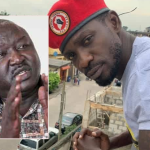
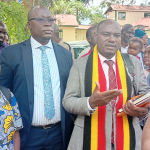
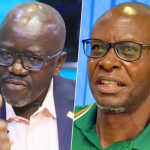


Senior counsel Andrew Kasirye the former Uganda Law Society president has strongly rubbished claims from senior colleague in the legal practice and also the junior lands minister Dr Sam Mayanja trough his powerful worded warning to president Museveni over the deadly plan being orchestrated by Buganda Kingdom Prime Minister Charles Peter Mayiga against his government.
In his article published on this website, minister Mayanja alleged that Mayiga and other leaders in Buganda Kingdom are building structures which will help them to take over power through violence.
Kasirye insists that Mayanja’s article was written in bad faith.
“If Mr Mayanja was not personally known to me, I might have brushed off the article as yet another angry outburst, perhaps even the ramblings of someone under the influence of an urban intoxicant, impersonating a scholar of politics and anthropology. But I know Mr Sam as I affectionately call him,” Kasirye noted.
More Read
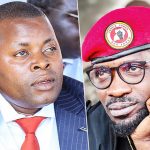
He added that, “He refers to me as ‘my president’ in reference to my tenure as the president of the Uganda Law Society 2002-2004 during which I had the privilege of presiding over him. He is a well trained lawyer, an old Budonian, a former elder in an Evangeline church and a man of considerable intellect.”
In his rebuttal, Kasirye wondered where Mayanja got the deep seated anti-Buganda sentiments and why he is the only senior government official consistently publishing criticisms, distortions and disparaging commentary against Buganda Kingdom and the person of Kabaka Ronald Muwenda Mutebi.
His actions according to counsel Kasirye take him to believe the speculations that because of the continued attack on Buganda and Kabaka Mutebi, it is the reason why he was appointed a minister insisting that his information is fake and only bases on his large range research on Buganda and the person of Kabaka Mutebi.
“I had the honour of beginning my legal career under the tutelage of the late former president Goffrey Lukongwa Binaisa, QC. In 1986, shortly after the NRM captured state power, Binaisa returned to Uganda and established Binaisa & Co. Advocate. Julius Kavuma Kabenge and myself were his partners and our firm was housed at Agip House,” Kasirye said.
Kasirye narrated that even though Binaisa was a former president of Uganda, he was using public transport and when president Museveni recognised it, he immediately assigned him a government vehicle and security informing him that it’s the way former presidents were supposed to be treated. He advised minister Mayanja to reflect before speaking about Uganda’s traditional institutions.
Kasirye refuted Mayinja’s claim that when Museveni captured state power, Mengo establishment regrouped with the aim of capturing state power and privileges which it lost in the 1966 Buganda crisis.
“These statements portray either ignorance or deliberately misrepresentation of historical facts. I spent countless hours in conversation with the late Binaisa, arguably one of the chief architects of Uganda’s transition from a Kingdom-federal arrangement to Republic,” he wrote.
He noted that from their discussion, he understood why Buganda was granted federal status in the 1962 independent constitution.
He disclosed that on 8th October, 1962, a day before Uganda was declared independent, Duke of Kent presided over a formal recognition ceremony at Kampala Town Hall acknowledging Buganda as a self governing state within the soon to be Republic of Uganda
He explained that this ceremony was necessary because the 1900 Buganda agreement which was signed between Buganda Kingdom officials and Her Majesty’s government of United Kingdom when Uganda had not yet been established as a whole, Buganda played a pivotal role in facilitating British colonial expansion to other Kingdoms and territories that formed Uganda as a country.
He stated that Buganda under the leadership of Sir Edward Mutesa attempted to divorce from Uganda’s political marriage because of being under democratic rule. This resulted into the 1953 deportation of King Mutesa by governor Sir Andrew Cohen
However, due to immense pressure, the colonial government was forced to returned Mutesa back to his Kingdom and the colonial government dropped the plans of abolishing any other Kingdom in Uganda.
Kasirye wondered why Mayanja is reframing the said complex and delicate history as a sinister Mengo Plot to recapture power noting that his narrative is not only unethical but potentially inflammatory especially for the young generation who are unfamiliar with the said history.
“Museveni himself understood Buganda’s importance. He promised those who joined the NRA struggle that he would restore the Kabakaship. Prince Ronald Muwenda Mutebi even visited the NRA battlefront and Museveni honoured him,” he added
He further accused Mayanja of distorting the events of the 1966 Buganda crisis which was triggered by the refusal of president Muteesa who also doubled as the Kabaka of Buganda to assent to a Bill passed by parliament seeking to implement a referendum on the lost counties insisting that the lost counties were awarded to Buganda by the British colonials for their support in defeating Omukama Kabalega of Bunyoro Kitara.
He explained that the referendum which was carried out returned the said counties to Bunyoro Kitara leading to territorial loss to Buganda which put Kabaka Muteesa in the direct conflict of interest.
“ Binaisa once told me how he warned Muteesa of the dangers of holding two offices with conflicting mandates. Eventually Muteesa vacated the presidential residence and returned to Twekobe. The Royal Guards stockpiled weapons and the Kabaka asked the prime minister Dr Milton Obote to relocate government offices outside Buganda,” Kasirye stated.
He explained that the crisis resulted when the Ugandan Army under the command of Col Idi Amin attacked Kabaka’s palace and even though Muteesa was a trained British military officer, he was overpowered and forced to retreat and escape arrest in a tragic political standoff that could not be solved through dialogue.
“It is precisely this kind of reckless political rhetoric often advanced by officials like Mayanja that stokes unnecessary tension and misinformation. Buganda Kingdom under the leadership of the wise and development prime minister Charles Peter Mayiga has never sought confrontation with the central government,” Kasirye stated.
Kasirye, a senior partner in Kasirye Byaruhanga and Company Advocates, a top city law firm stated that the private conversations he held with the deceased may not meet the standards of courtrooms evidence but those who dismiss his observations as a hearsay might benefit from revisiting the country’s history.