





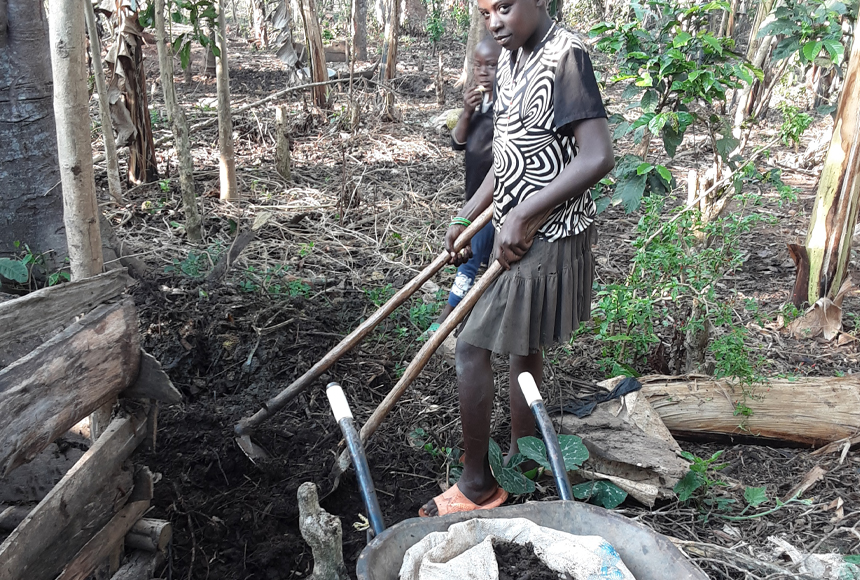
Despite the continuous efforts to encourage farmers to increase crop production and productivity, less or no efforts have been put on sustainable livestock manure use which calls for reinvention of simple ways to boost the agricultural sector.
This is due to inadequate manure management skills that leads to nutrient loss, reducing quantity and quality of the organic fertilizer applied.
Experts say that without correct management, manure can lead to several negative environmental and health (in animals, humans and ecosystem) effects threatening livelihoods.
Livestock manure is a critical asset that can help overcome yield limitation because it improves soil health, provides nutrients to plants and improves crop yields, thereby contributing to food security and nutrition. It can also be used to generate clean energy (i.e. biogas) for lighting and cooking.
More Read

But scientists say that the management of manure is sub optimal in a way that they do not cover manure leading to its exposure to sunlight and rain thereby losing the nutrients and that also cause air and water pollution.
Dr Ibrahim Wanyama, a scientist with International Livestock Research Institute (ILRI) says that during the surveys, they found out that a lot of manure is generated but there is lack of information on how it’s managed and handled.
“If you do not handle this manure well; if you do not store the manure well, you lose most of the nutrients, especially nitrogen. If you expose it to rain water, it dissolves those nutrients and they are lost into the environment and also if you expose it to sunlight, you lose almost 50 percent of the nitrogen,” he warns.
According to Dr Wanyama however, for many farmers who apply manure, what they are applying has fewer nutrients because instead of applying half a basin, they end up applying a full basin and yet the manure is on demand for crop production.
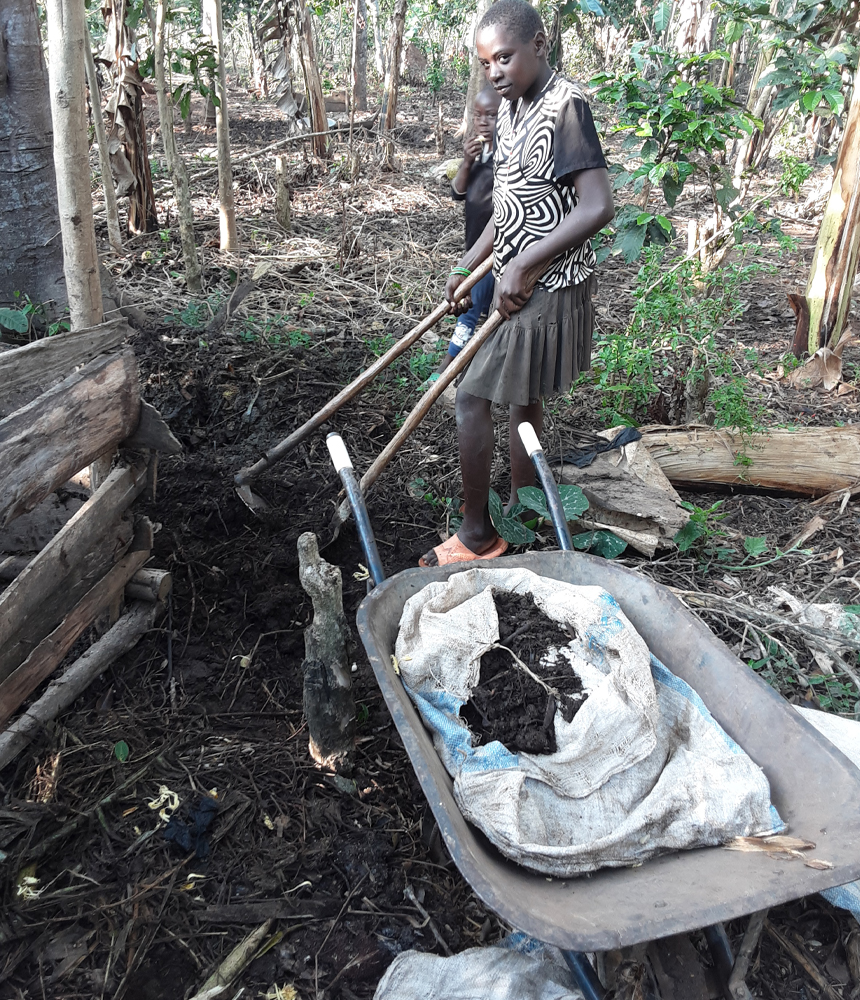
“We want to devise simple ways which can be adopted by the farmers and also, we know at the back of our minds that farmers may do these things because of the labour involved and also the capital investment. So, we are looking at simple methods which can retain these nutrients but at the same time reduce on the pathogen lots in the manure,” he says.
Dr Wanyama adds that farmers are not aware of the health implications of handling manure with some handling it with bare hands while others use gumboots instead of using full protective gear.
“For you to be safe, you need to take all the safety precautions. You need to put on gloves and masks but most of them just put on gloves and gumboots and leave out the other safety gears which is a problem and all this is because farmers lack information,” he says.
About economics, Dr Wanyama says that they have since found that pig manure specifically is what most of the farmers use on their farms.
“…the total quantity of manure, say 90 percent of the manure produced at the farm is used by the farmers and also most farmers use the manure for soil fertilization. So, you cannot tell these people to sell it because even this manure is not enough.”
The scientist adds that for other livestock species like cattle in Kiruhura and Kazo districts where there are more animals than crop fields, there is need to develop a business case.
Nelson Kajoba, a researcher from Makerere University says that most of the male headed households had women doing the rudimentally part that is tethering where collection of manure becomes a little bit challenging.
“Majority of the households, whether they are using pig pens or tethering, in Buikwe, Mpigi and Mukono districts have not received any training on sustainable manure management apart from issues to do with daily collection which is connected to sanitation of the pig house and minimizing of diseases and parasites in animal confinement,” he says.
According to Kajoba, lack of training is a worrying trend because manure has nutrients and has potential to transmit diseases but the training could not cover it.
He adds that those farmers using pig pens are doing more frequent cleaning especially on a daily basis than farmers doing tethering.
“We found out that majority of the farmers are not separating the pig manure, but instead they are just collecting it with the urine. Those with pig pens collect and pile it behind the house and then for those tethering, they just shift the animal, hence daily spread,” Kajoba adds.
He underscored that non-separation of pig manure from the urine generates a bad stench, which becomes a public health challenge for the neighbours and community at large.
He says that there are farmers who do nothing with manure thus end up losing a resource that would be used.
Dr Angella Nakafeero, the Commissioner in the Ministry of Gender says that the discussion about manure is very important; because women who are small farmers need manure for their gardens while some of them have been doing critical work in terms of small ruminants; poultry and pigs.
Nakafeero says manure is necessary and it should be looked at as a resource because so many products can be made out of manure and it can be handled as an income generating activity.
She adds, “So it can help small scale farmers especially women to earn an extra income. Proper management of manure and utilization is important in terms of improving productivity and also, we have heard about the health-related effects, risks of contamination of water but also contamination of our own lives. You find that when the environment is contaminated it affects the health of the household members.”
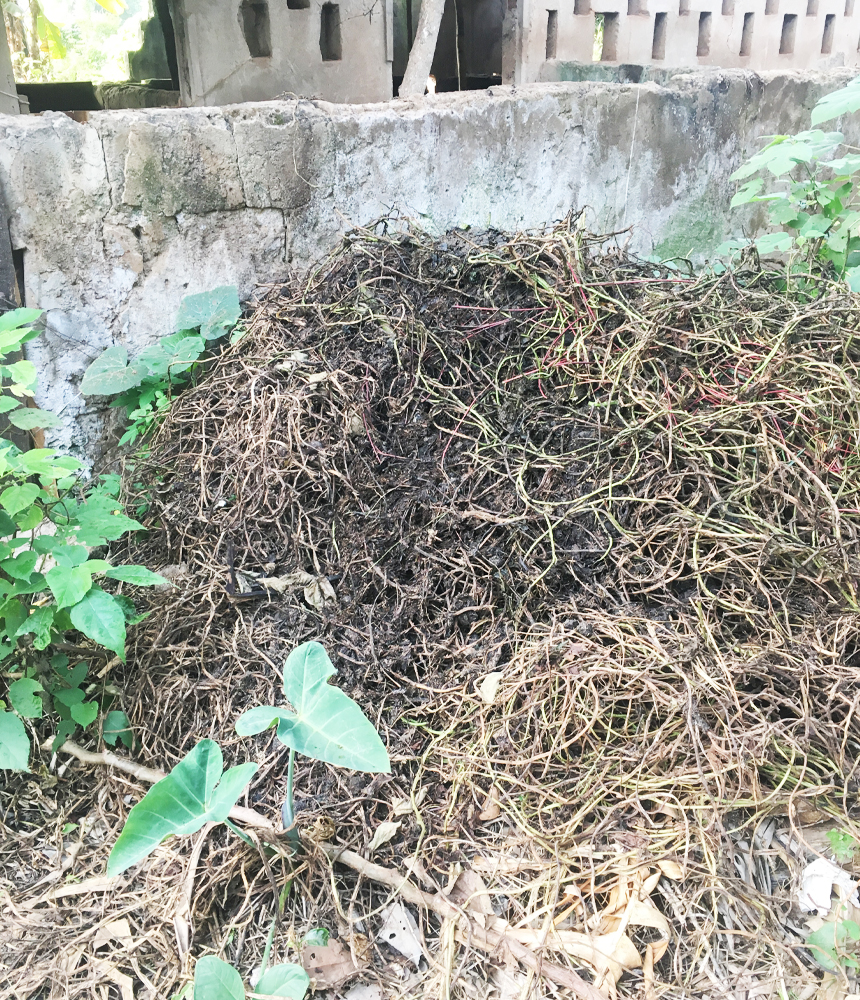
Dr. Nakafeero suggests that the government should come in to help small-scale farmers in terms of wealth creation to enable them earn extra income since manure presents a great potential.
Research by Makerere University shows a large percentage of farmers (i.e. 96%) in Mpigi, Buikwe and Mukono districts do not cover liquid and solid manure pits and heaps hence losing nutrients, which calls on extension workers to train them on best practices.
“We find that most farmers keep manure between one and three months and then they take it to the garden. This practice is good if best practices are considered. But we have also these guys who deposit and drop it there. So, the risk of nutrients flowing into the waters and then the emissions are still there,” says the research.
Researchers say that some farmers in Mpigi, Buikwe & Mukono districts (i.e. 6.3%) have started selling pig manure while others in a worrying trend pick it and throw it in the nearby vegetation.
Agricultural promoters, Regenerate Africa and ILRI with partners Makerere University, Veterinaries Sans Frontières Germany, Food and Agriculture Organization, and Swiss Federal Excellence Centre for Agricultural Research unveiled the project and made the remarks at a dissemination workshop on Sustainable Manure Management Studies in Uganda.
The studies were implemented under the project, ‘Circularity of Nutrients in Agroecosystems and Co-benefits for Animal and Human health,’ financed by Solution-oriented Research for Development (SOR4D) programme, a joint funding instrument between the Swiss Agency for Development and Cooperation (SDC) and the Swiss National Science Foundation (SNSF).
In Uganda, the project intervention focuses on piggery, to generate evidence-based research outputs on climate smart agriculture and safe manure practice.
Dr. Joshua Zake, Technical & Strategic Advisor at Regenerate Africa indicated that the Policy review and gap analysis results reveal the absence of specific policy frameworks and guidelines to advance sustainable livestock manure management.
He says that manure management is a cross-sectoral issue with policies and laws cutting across – Health; Agriculture; Energy; Gender, Labour and Social Development; Water & Environment sectors.
“There is Insufficient data on manure quantities and greenhouse gas emissions from manure; and high costs of technologies that support treatment and utilisation of manure, such as biogas systems,” says Dr Zake.
He says that some policies are mindful about gender inclusion (women & youth participation) in general terms, but not very explicit to manure management.
Dr. Didacus Namannya, Geographer & Focal Point (Climate Change and Health), Ministry of Health represented the Commissioner, Environmental Health. In his closing remarks, he called for enhanced coordination and synergies among responsible institutions, stakeholders and actors for effective implementation of responsive actions to advance sustainable manure management, for delivery of livelihoods, environmental protection, animal & human health co-benefits.
Statistics
According to the 2021 pig population, the excreted Nitrogen in manure is potentially an equivalent of 3 million 50 kg bags Urea fertilizer
Statistics also show that 45 percent of farmers own 1-4 pigs, 35 percent own 5-10 pigs, 15 percent (11-20) while 5 percent own 21-65 pigs but there is high use and demand for manure in areas where crop enterprise is important.